
A Wine for Women? No, Thanks. Women in Wine Deserve Better.
When Women in Wine Still Make Headlines
In late October 2026, I read some news that genuinely made me happy: for the 2027 edition of OperaWine, Wine Spectator introduced a new category, Led by Women, recognising 46 Italian wineries where women play a key role in ownership, winemaking or representation.
It is certainly good news. But it also got me thinking.
Why, in 2026, do we still need to point out that a winery is run by women? And why is a woman's success in a traditionally male-dominated industry still considered something exceptional?
Don't get me wrong: I'm glad we're talking about it. In fact, I believe we need to. But I dream of a time when it simply won't be news anymore.
From Biomedical Engineer to Sommelier: A Perspective That Goes Back a Long Way
Before entering the world of wine, I had a completely different job: I was a biomedical engineer, working with robotic machinery and systems.
A professional environment that, in many people's minds, is still associated with men.
I have always taken pride in working in a field where women weren't necessarily expected to be. Not because I thought I was doing anything extraordinary, but because I have never believed that a profession should be defined by the gender of the person doing it.
When I started studying wine, and later when Pietro and I opened La Bidule, I brought that same perspective with me.
The wine world has a long history of family businesses, vineyards and wineries where, for generations, the most visible figure was often a man.
Today, we are meeting more and more women in wine: knowledgeable, passionate, brilliant professionals who are capable of innovating while remaining deeply connected to their history and their land.
And I have a particular curiosity about them: whenever I discover a winery run by women, I want to taste their wines.
Women in Wine: Three Stories Close to My Heart
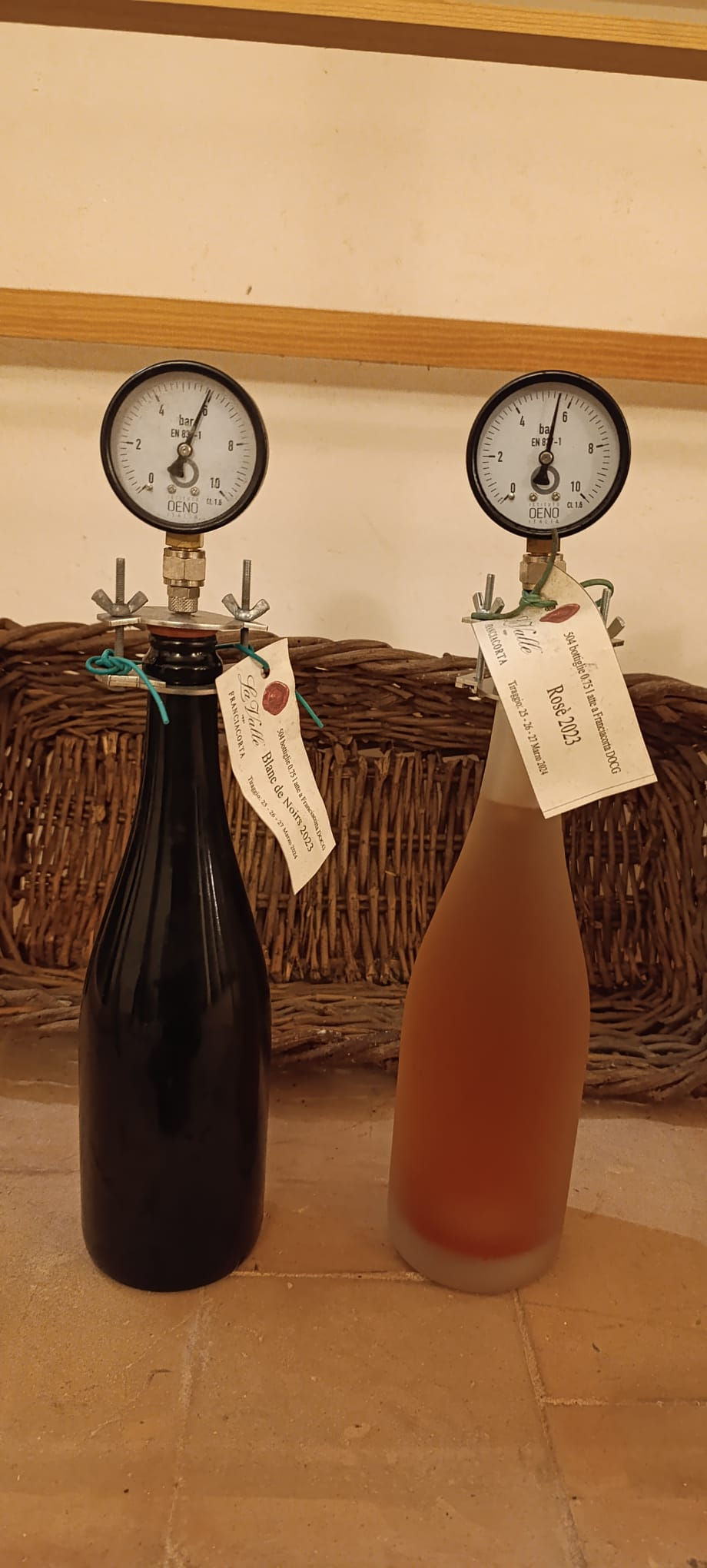
One of the very first wineries we placed an order with when opening La Bidule was La Valle, in Franciacorta, in the village of Rodengo Saiano.
The winery was founded by Eugenio Pezzola, and today his daughters, Francesca and Cristina, carry his vision forward.
I still remember with great pleasure the morning we spent there: visiting the winery, tasting the wines and taking the time to discover a business that would become part of our wine selection almost from the very beginning.
Another encounter that means a great deal to me is with Madri Leone, a winery in Trinitapoli, Puglia, run by sisters Marilia and Linda Leone.
We first met them at Ciserano Decanta and later contacted them for our initial order. They have always been incredibly kind, helpful and thoughtful towards us.
Their project also has something truly special about it: every wine is dedicated to a woman who has left her mark on history. Their labels become an opportunity to remember remarkable women, some of whom are not widely known, and to tell stories of their courage and achievements.
It is a way of communicating wine that really resonates with me.
And then there is Tenuta Roveglia, in the Lugana wine region.
In this case, the story was different. We chose their wines because of their quality and the awards they had received, particularly from the Vitae guide published by the Italian Sommelier Association (AIS).
It was only during our visit to the winery that we discovered it is now owned by three sisters: Sara, Vanessa and Babettli Azzone.
It was a wonderful discovery, but their wines had already won us over.
And that is precisely the point: a wine should be chosen because it is good, because it expresses its territory, because it moves us. Knowing that a woman is behind that bottle is another reason to discover and share her story, not a criterion that replaces quality.
Why We Chose Pink Stickers at La Bidule
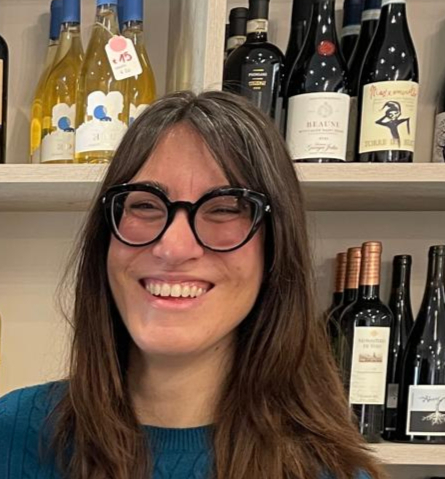
Anyone who walks into our wine shop and looks at the bottles on our shelves might notice a small detail: some of the price tags have a pink sticker.
It doesn't mean the wine is on sale. Nor does it indicate a particular style or a taste suited to a specific audience.
The pink sticker identifies wineries that are entirely or predominantly run by women.
It is something we introduced right from the beginning, as a way of recognising and highlighting the work of female wine producers.
We have always tried to explain the meaning behind these stickers to our customers, and many people, once they understand the idea, have complimented us on our choice.
For me, that is a small but meaningful satisfaction.
Because behind that little symbol there is dedication, perseverance and resilience. There are stories of entrepreneurship, difficult decisions, hard work in the vineyard, in the cellar and in running a business.
Sometimes, in wineries run by women, I feel I can recognise a particular sensitivity: in the elegance of certain wines, the care given to their labels and the attention paid to their visual identity.
That is, of course, my personal impression, not a rule. I don't believe there is such a thing as an exclusively feminine style of wine. And that is exactly why there is one expression I simply cannot stand.
"It's a Wine for Women." What Is That Supposed to Mean?
How many times have you heard someone say that?
Usually, it is used to describe a wine that is a little sweet, light, easy-drinking and not particularly demanding.
As if a woman couldn't appreciate a structured wine, a powerful red, great aromatic complexity or an austere palate.
As if we were somehow expected to settle for something bland and safely in the middle.
Well, that makes me angry.
There are no wines for men and wines for women. There are different wines, and there are people with different tastes.
A woman might love a bold, complex Barolo, while a man might prefer a sweet Moscato. Neither of them should have to justify their choice.
I don't want women to be confined to some small corner of the wine world, with their preferences already decided by someone else.
We're perfectly capable of claiming the whole ring.
And that goes for the people who drink wine, the people who choose it, the people who talk about it and the people who make it.
An Important Milestone, but the Journey Continues
In February 2026, Cristina Mercuri became the first Italian woman to earn the title of Master of Wine, one of the most demanding and prestigious qualifications in the wine industry.
Before dedicating herself to wine, she worked as a lawyer. A career path different from mine, but one that made me smile when I thought about how many different roads can lead to the same passion.
Her achievement represents an important milestone.
And yet I would love it if, one day, the news were simply this: an Italian wine professional has earned the title of Master of Wine.
Nothing more needs to be said.
The same should apply to an outstanding oenologist, a sommelier or a wine entrepreneur.
I want these women to be recognised for their knowledge, their talent and their work. Exactly as men are, or should be.
A Little Pink Sticker, a Much Bigger Story
I hope we will reach a point where seeing a woman running a winery is so normal that it no longer deserves a newspaper headline.
But I also believe we still have a long way to go.
That is why, at La Bidule, we will continue putting our pink stickers on the price tags of wines from women-led wineries.
Not to create a separate category. Not to suggest that those wines somehow taste different.
But to recognise the dedication, elegance, perseverance and resilience of the women who have contributed, and continue to contribute, to the history of wine.
Because wine has no gender. But the people behind it have stories worth telling.
If you're curious to discover which of these stories can be found on our shelves, you can explore our wine selection or, even better, stop by La Bidule and ask us about them.
Erica


Comments